What's in a name?
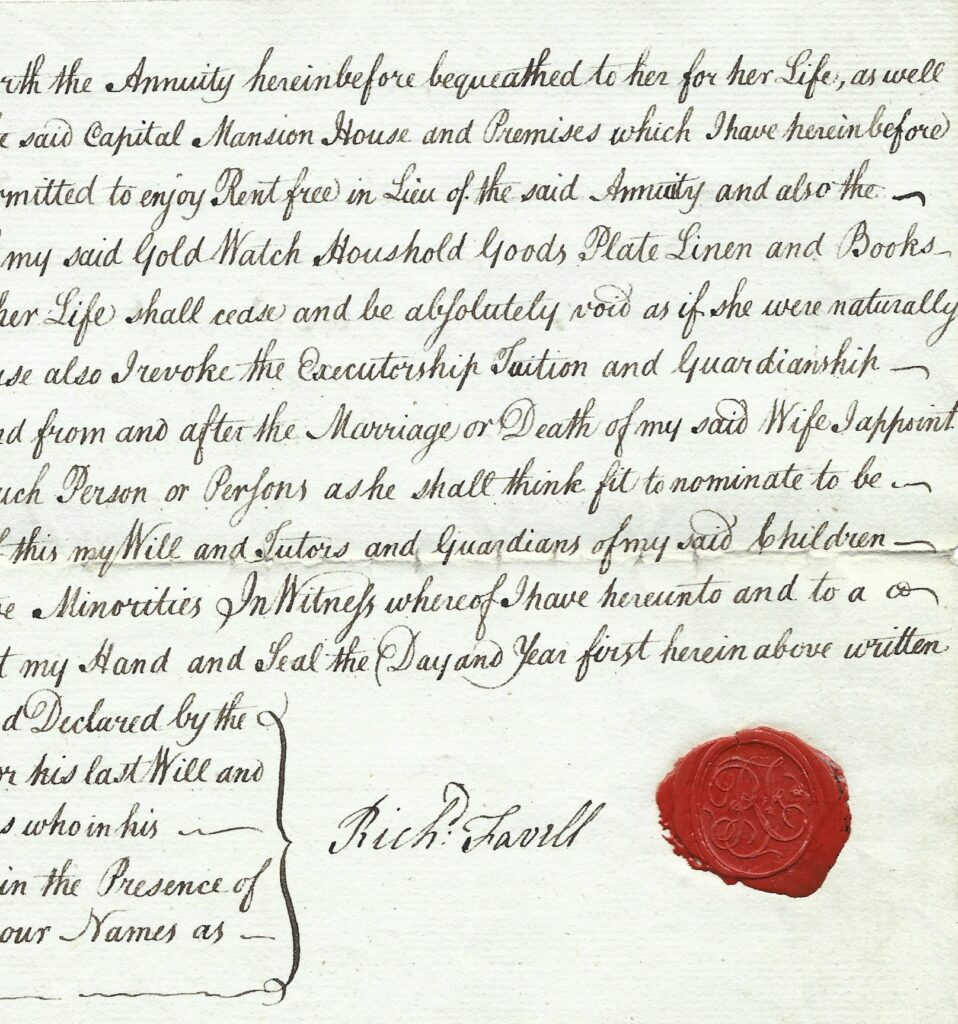
The Favell surname has many variations including Favell, Favelle, Fauvel, Favill, Favil and so on. Which is correct? Well, I guess, they all are. When compulsory registration of births began in 1837 and 10 yearly census taking began 1841, not everyone could read or write. The person completing the registration or conducting the census wrote down what they thought they heard. If it was not a surname that they were familiar with, they probably took a stab at how they thought it should be spelt.
This had been happening with parish registers for many years previous. There are some families that appear in the 19th century census records who are clearly the very same family, but at the 10 year intervals were recoded as Favel, Favell and Favelle.
Even for those that were well educated, there was not necessarily a convention guiding how things should be spelt and sometimes there were variations even under the same hand. There is an old saying in genealogy that “if it sounds right, it probably is Wright.”
And how is it pronounced? To rhyme with Naval or Travel? Well that depends on your regional accent I guess, with Londoners favouring Travel and East Anglians Naval. Or a rather French approach with emphasis on the velle?
So where does the surname come from? Most theories seem to suggest it is a Norman name and came over from France at the time of the conquest. Are we descendants of Johannes Fauvel of Weston Favell manor, now suburb of Northamptonshire? Or are we named after it as that is where an original Favell came from? Possibly, the answer is both.
There are / were concentrations of Favells in Yorkshire, Bedfordshire, Lincolnshire and London.
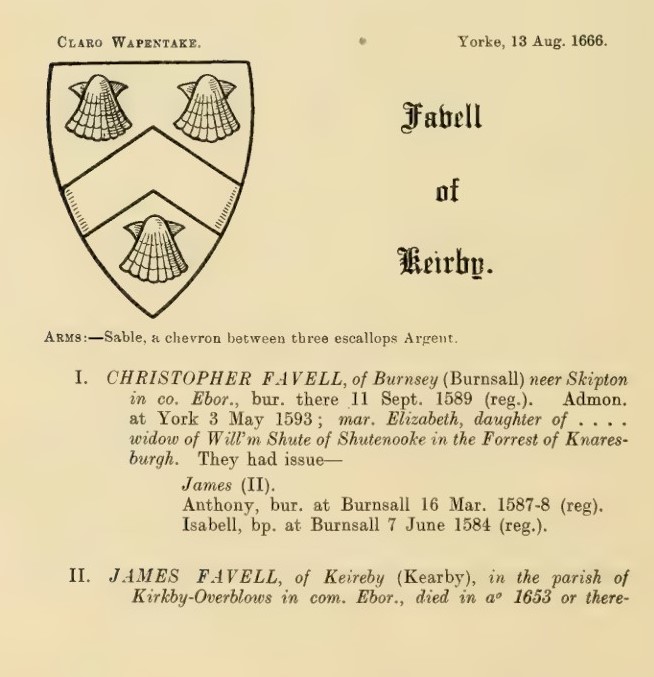
In 1666 the Herald’s visitation to Yorkshire recorded the Favell family and its’ coat of arms, a chevron between three escallops, tracing back to Christopher Favell who was buried in Burnsall, near Skipton in Yorkshire in 1589. Christophers’ descendant included a Steward to Algernon, Earle of Northumberland and seems to be the origin of the Sheffield area Favells who later became Doctors, Surgeons, Silversmiths and Wine merchants.
In 1540 there were Favells in Hexton, Hertfordshire, with Hugh Favel and his children probably being the origin of the family that later expanded into Bedfordshire and Huntingdonshire.
Were they originally one and the same family? Their fortunes were certainly different the latter family firmly based in agriculture, being farmers, yeoman, and later farm labourers.
The system of primogeniture in inheritance where the titles, land and wealth are handed to the eldest son might over time result in younger sons of Gentry becoming farmers, yeoman farmers, then eventually tenant farmers through the generations. The enclosure acts enclosing the commons might be the final blow reducing them to labourers.
So, it is possible that the majority of Favells are all of the same family if you could trace records back far enough, but they also might just have come from Weston Favell!
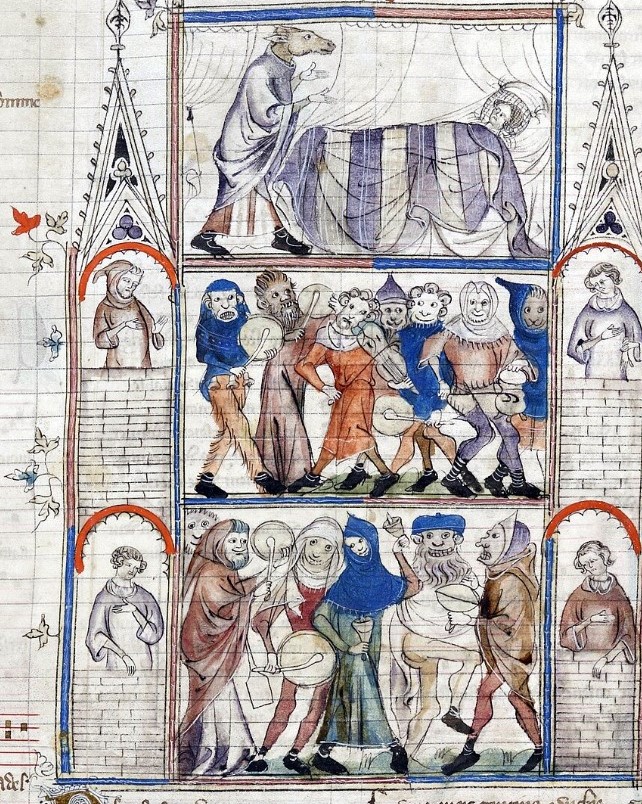
The late Christine Favell of Felixstowe wrote her original piece “The Fortunes of Favell” and “What’s in a name?” looking back at Johannes Fauvel of Weston Favell manor and also the French Proverb of Fauvel the Dun Horse.