Eveline Favell

Eveline was born in Tynemouth on the 12th Aug 1882 and remained living with her parent’s until starting work as a teacher in 1919.

Eveline took a position as Assistant Mistress (Music) at Beesley Grange, Storr’s Hall, Ingleton in Yorkshire, where she taught singing.

A few years later she was back at her parent’s home in Weybridge and working as a

Teacher of singing and piano forte at Heath House School Weybridge, where she worked between 1921 and 1929.  During this period, she also gave private lessons from the Weybridge house.

In 1925 Eveline was registered with Teachers Registration Council and had attained a

Royal Academy of Music certificate for teaching voice culture and class singing to children, having attended a special training course for teachers.

In 1939, at the age of 57, Eveline was retired and living at Flower Woodlands, in Pangbourne, Berkshire.  Her income was still sufficient enough for her to able to afford a live-in domestic servant.

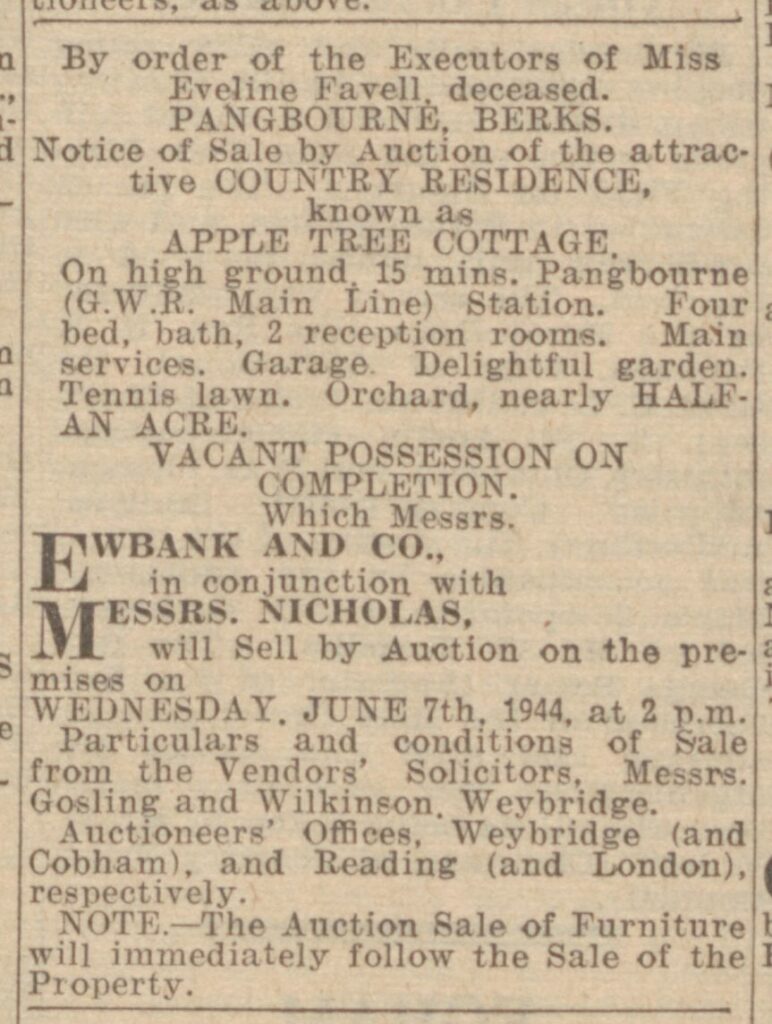
Eveline died at the relatively young age of 61 in 1944.  She then owned Apple Tree Cottage in Pangbourne, a four bedroom property with two reception rooms, garage, garden, tennis lawn, and orchard, standing in half an acre.  The cottage was sold at auction, along with her furniture, by the executors of her will. 
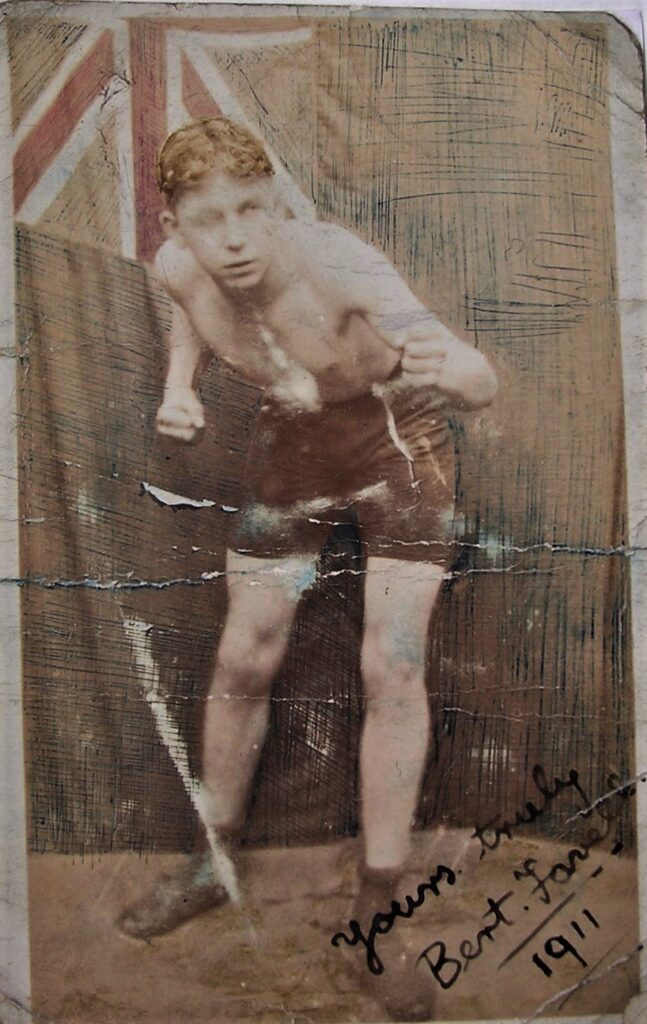
Cecil Bert Favell

During his service he sent home letters, photographs and postcards.  The photos are mostly addressed to youngest sister Ivy Primrose and record his travels.  It was while he was away on service that his Father suddenly left home, leaving his wife and daughter to fend for themselves.  Something he was never really forgiven for.  The reason is not known, but is is thought that he had lent a large sum of money to a friend who had then defaulted on the loan.  One of Bert’s letters asks if ‘Dad got his money back’.  My own Grandfather believed that Albert had lost a large sum gambling and his very strict wife had thrown him out of the house, throwing the china at him as he left.   Albert went off to London to live with his cousins in Camden Town and never returned to Ipswich, leaving young Bert to try to finance his mother and young Sister on his army pay.

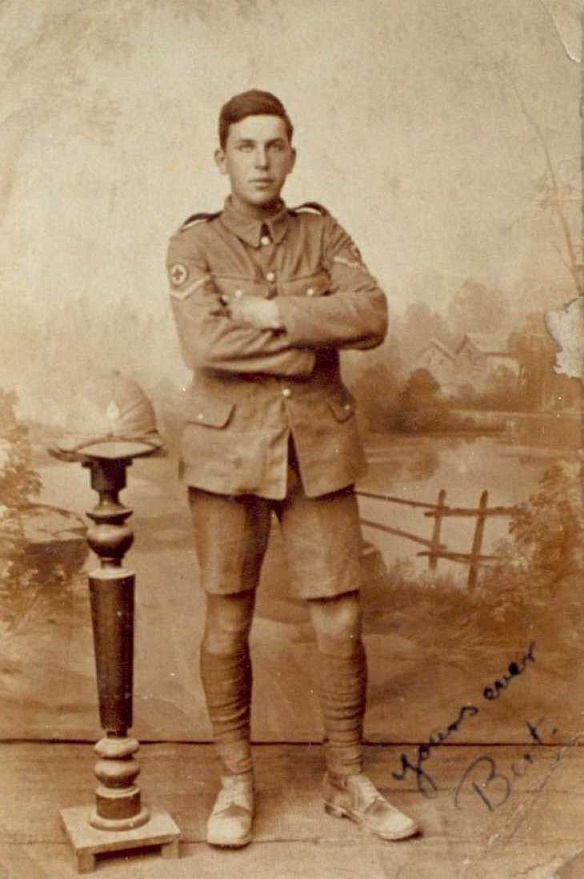
Bert first saw action as an Ambulance driver as a part of of the sea-borne invasion force that landed at Suvla Bay, Gallipoli, Turkey on 25th April 1915.  A letter home to his Mother describes his first days there.  “We had to land on the enemies country so you can guess it was not all honey we were under fire & had to get into the water past our lines but all landed safe & are all safe as yet.  Yesterday being about the first lull in the fighting our Major General came round & personally congratulated and thanked us on the splendid work we have done he said we might write home and tell our people he had been round.  We are being shelled continuously.  I have to keep ducking down into the trench as we sleep in trenches and we are now digging trenches 5ft deep so you can guess it is a nice job writing letters.”

He goes on to talk about news of some friends and how he would appreciate a cake being sent out to him but finishes with “Now I must close as it is my turn to go digging.  Remember me to all, Best love from your Son Bert.”  Bert would have taken part in the remarkable evacuation when it was realised that the toe- hold gained against the Turks could not be held.  Supplies and reinforcements could not be provided in sufficient numbers for the ANZAC and British troops to break out and they faced appalling conditions as they clung to the beach-heads while under heavy fire. Even the weather was against them and those making it inland found themselves bogged down in thick mud

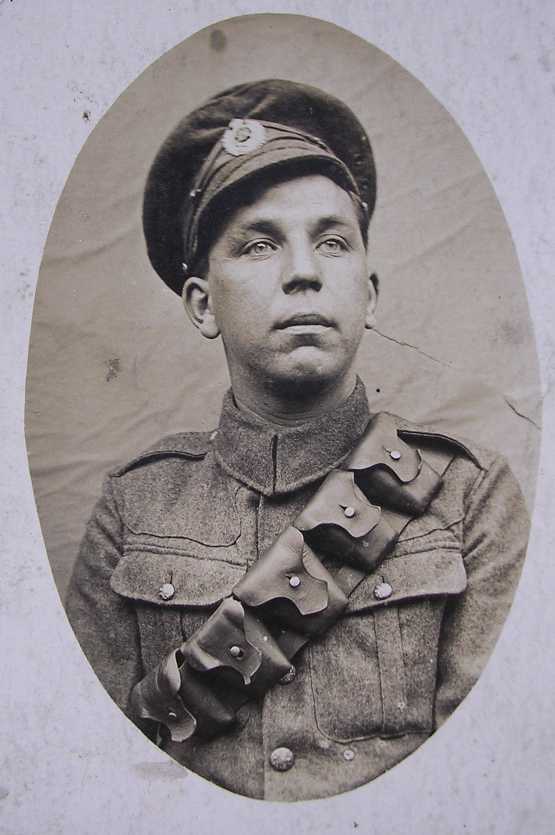
Cecil Bert Favell
Cecil Bert Favell

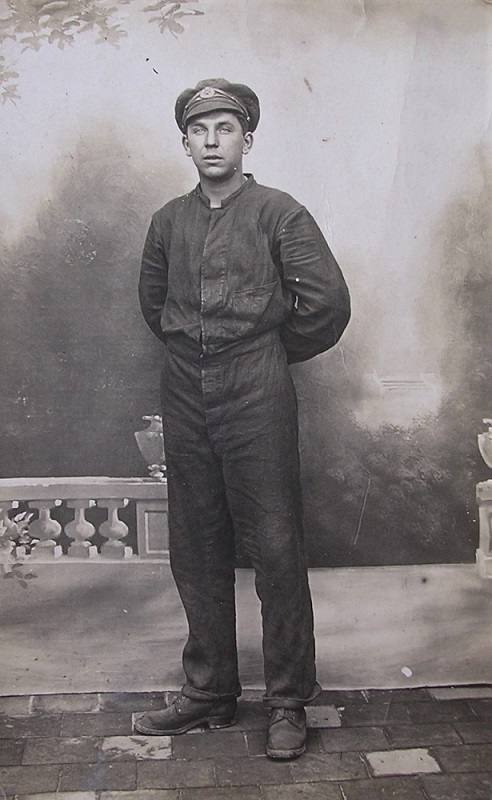
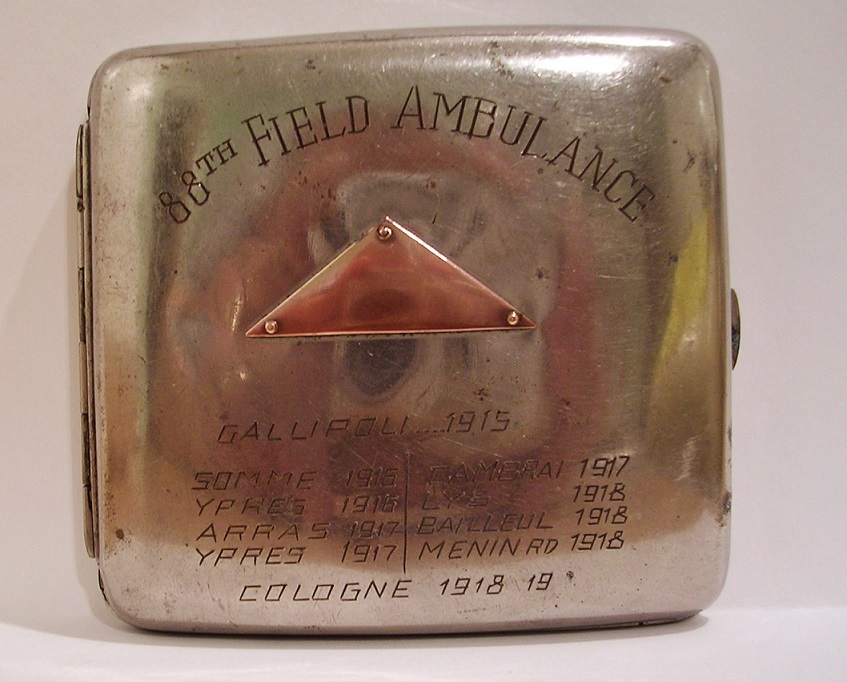
After the evacuation from Suvla Bay, Bert spent a year under canvas at Salonika before being sent to France where he served in the Ypres and Somme areas.  He was transferred to the Royal Engineers due to some earlier electrical training and became 236466  Sapper Favell with the 353rd Electrical and Mechanical Company, Royal Engineers.  The photographs show a different Bert from the fresh faced recruit at the start of the war.  Among the souvenirs he brought home is an improvised ‘Crown & Anchor’ board, hand painted onto stiff army canvas and a large leather shaker for the ‘put and take’ dice.  Strictly illegal, the gambling games would be hastily set up and just as quickly cleared away should anyone in authority show up.  It is likely that Bert ran his own games!  Another souvenir was known as the Ypres knocker.  Literally just that – a large brass door knocker, bowed out of shape, probably by shell-fire that he is reputed to have salvaged from a building in the devastated Town of Ypres.  He went on to be in charge of a mobile electrical generating station and after the war worked for his local electrical generating board.  His own souvenir cigarette case, probably engraved especially lists his units movements and includes Gallipoli, Somme, Ypres, Arras, Cambai. Loos, Bailleul, Menin Road and Cologne.,   He was demobilised’ on the 31st January 1919 and in 1920 married his sweetheart Edith Scrivener.  Bert died in 1967.  His daughter Christine was a well known teacher in Felixstowe, Suffolk and I am grateful to her for all of the information and photographs that she passed down.

Cecil Bert Favell's cigarette case
Cecil Bert Favell RE
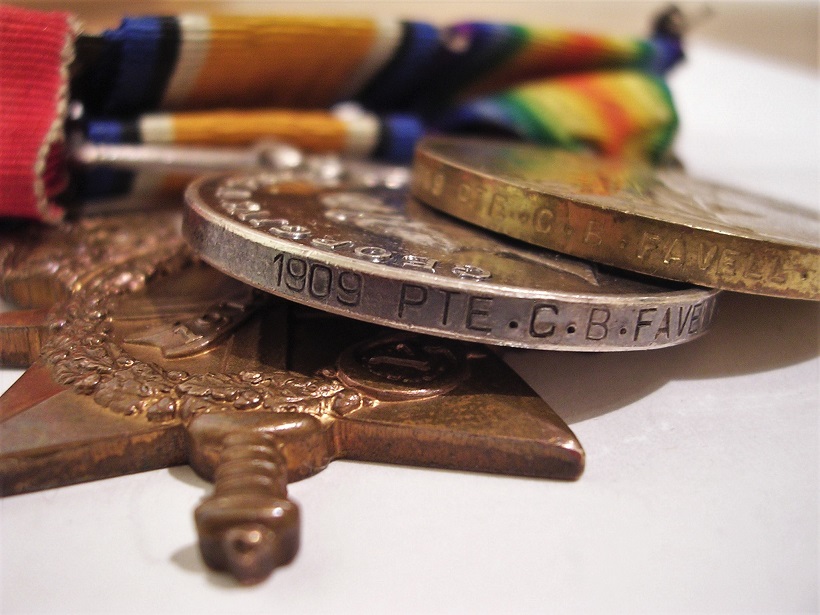
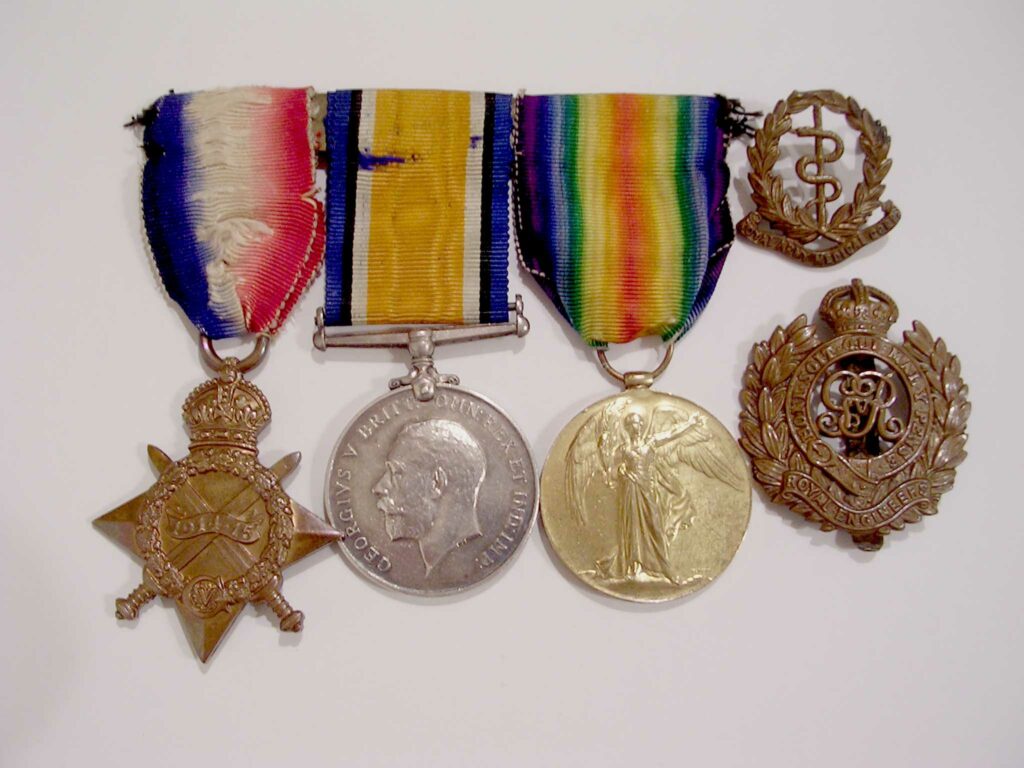
Cecil Bert Favell 's war medals
Cecil Bert Favell Medals
Cecil Bert Favell - RAMC & RE Badges, 1914 Star, War Medal & Victory Medal