Lieutenant Commander Richard Favell DSC
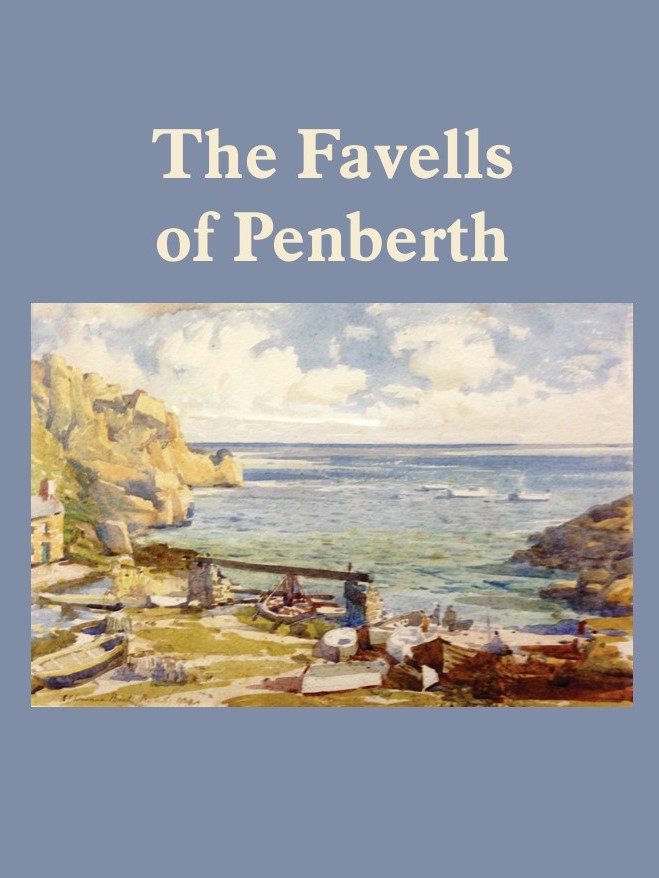
(The majority of information for this page is extracted from the publication Favells of Penbarth, 2013, compiled by the Grandchildren of Alice Favell)
Richard Favell was the eldest child of Alice and Vernon Favell and was born in Sheffield on 12 March 1914. He spent 20 years in the Royal Navy and was one of the very few submarine commanders to survive the entire Second World War.
Richard Favell was sent to Lockers Park preparatory school in Hertfordshire, in the expectation that he would go on to Winchester. Notwithstanding an outstanding academic record (he was expected to win a scholarship), he persuaded his reluctant father to let him go into the Royal Navy as a cadet at the Britannia Naval College at Dartmouth. Here he won the King’s Dirk and was commissioned a Midshipman in January 1932.
He later claimed that his potential Winchester housemaster’s ill-concealed disappointment at his football abilities played a part in this crucial decision which was to determine his future!
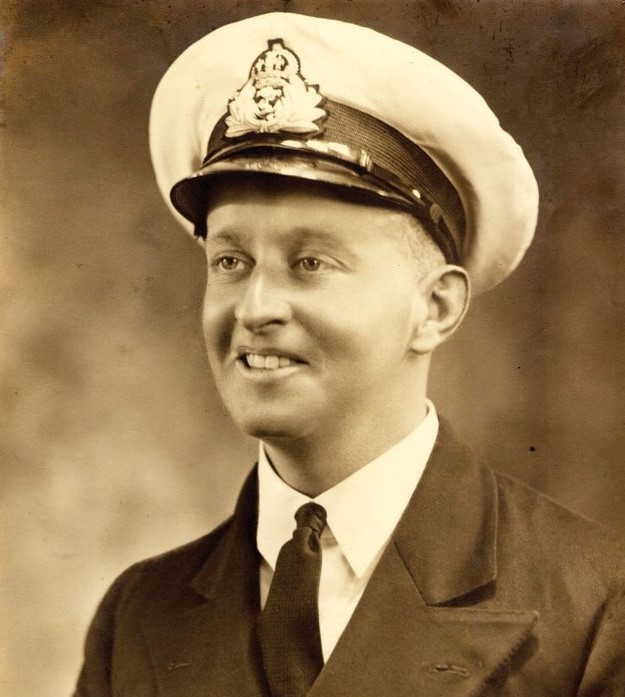
Richard Favell’s first appointment was in the battleship HMS Resolution until the beginning of 1934. During a visit to Hong Kong, the young Lieutenant Favell called on the admiral then commanding the China station at the suggestion of one of his closest friends from Dartmouth. It was here that he met the young Barbara Talbot, the only daughter of Vice-Admiral Sir Cecil Talbot a former Submarines Flag Officer. Richard and Barbara were married on 21st December 1940.
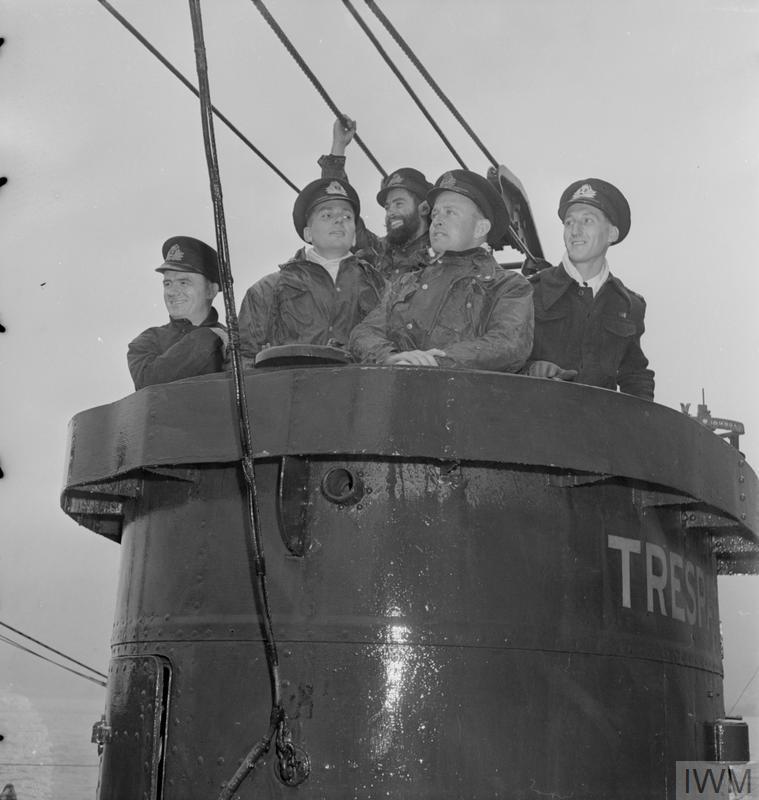
Richard Favell was selected for a series of command training courses and in February 1939, he was appointed First Lieutenant in HM Submarine H33. Having passed the submarine commanders’ course in 1940, he was appointed captain successively of H33, HMS Otus, HMS Trespasser and HMS Talent. He was almost continuously at sea from the beginning of the Second World War until July 1945. There are said to have been only two Royal Navy submarine commanders at the beginning of the war who survived. Despite these terrible losses, Richard Favell told one of his sons-in-law that “It never occurred to us that we might lose the War”.
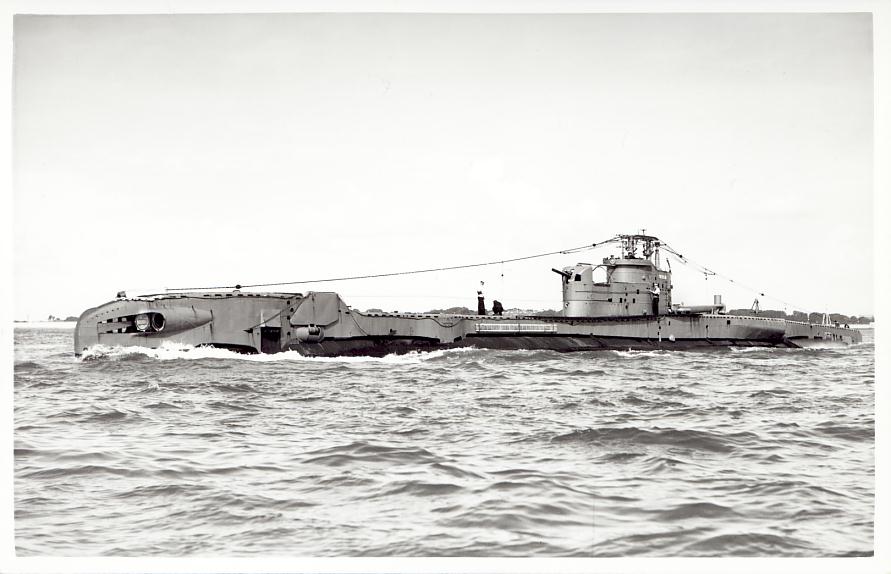
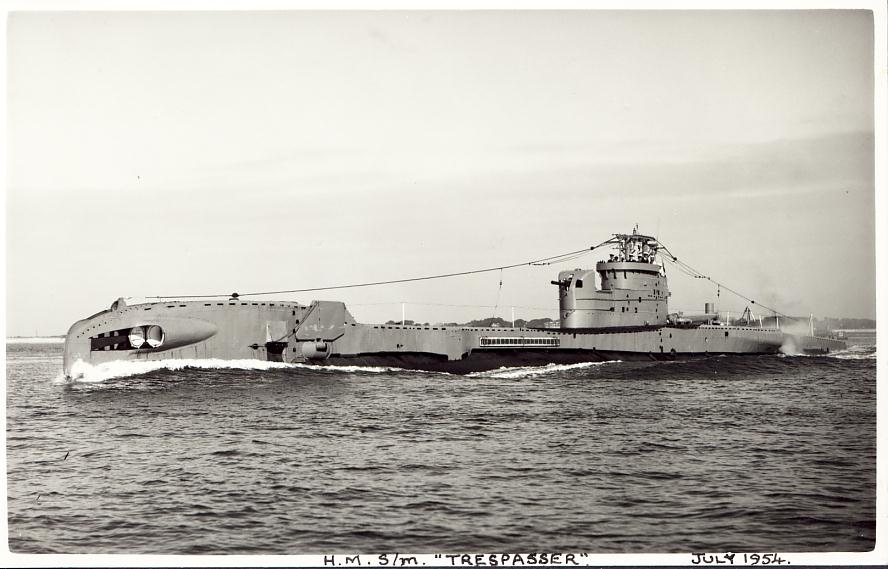
Typically, Richard Favell seldom spoke of his wartime service to his family. However, his time in command of HMS Trespasser for two years to July 1944 is one of the most celebrated in the history of the submarine service. Trespasser played a role in supplying the Resistance to the German occupation of Crete.
HMS Trespasser was initially deployed in the North Sea and off Norway, where the German battleship Scharnhorst and her escorts were based. During November 1942, she was assigned to help defend convoys of supplies to Russia – often described as “the worst journey in the world” – from attacks by the German Navy. On 31 December 1942, the Battle of the Barents Sea took place, in which the Russian Convoy JW51B was successfully defended south of Spitzbergen from attacks by the German battleship Lutzow, cruiser Hipper and a strong escort of destroyers. The captain of the Royal Navy destroyers escorting the convoy was awarded the Victoria Cross. All the merchantmen duly arrived in Mermansk. Trespasser was then transferred to the Mediterranean and was involved in a number of secret missions in Sicily, Crete and the Aegean. She was sent to the Far East at the beginning of 1944, and was involved in eight separate operational patrols, often involving the Special Operations Executive (SOE), off Burma and Siam and in the Melacca Straits.
At some point in in 1944 Richard was to learn of the death of his younger brother Teddy who was serving in France with the Oxford & Buckinghamshire Light Infantry. He was a Captain in the regiment and landed in France by glider in the early hours of D Day. He was killed in action a few weeks later near Ranville not far from Pegasus bridge.
Richard had been promoted Lieutenant Commander in July 1943 and was awarded the Distinguished Service Cross in November 1944. He was promoted Commander in December 1947, and retired from the navy two years later, at his mother’s request to take over the running of the family shipping line, HE Moss and Co.
Ernest Moss had started as a coal merchant in Liverpool in the 1850s; and by 1950 HE Moss & Co owned six oil tankers and had offices in London (at the Baltic Exchange), Liverpool and Newcastle. Richard Favell took over responsibility for running the company from his maternal uncle, Charles Molyneux Cohan and successfully navigated the shoals of the Suez Crisis and other challenges before selling the company to Cunard in 1964, when he finally retired from the sea.
Richard’s mother died in July 1954 and Richard, her surviving son, was left the land and estate at Penberth in Cornwall. He was initially reluctant to move his young family and recognising the resulting need for weekly train journeys from Penzance to London, Liverpool and Newcastle.
Family legend has it that he travelled down to Penberth to tell his late mother’s employees that he would not be taking over from her. But, in the event he found that he could not get the words out; and he returned to his family in Woking to tell his delighted daughters that their dream of living at Penberth was to come true.
For the rest of his life, Richard Favell devoted his energies and talent to caring for his family, Penberth and the county of Cornwall (in that order). He negotiated an agreement with the National Trust, which has preserved the cove and the surrounding cliff-tops as far as Porthcurno “for everyone, for ever”. This was one of the first gifts to Enterprise Neptune, a National Trust initiative to preserve and protect the nation’s coastline from development.
As his father had done before him, Richard Favell played an active part in local public life. He served as a Trustee of the National Trust Devon and Cornwall branch. He served as High Sheriff of Cornwall in 1963; and he was the last High Sheriff in England to have to witness a hanging, before the abolition of capital punishment. After all that he had been through during the war, he found this responsibility for witnessing further loss of life deeply distressing.
He was appointed a Deputy Lieutenant for the county of Cornwall in 1959 and served as a magistrate for over 20 years. Richard Favell died after a short illness in November 1995; and his ashes are interred in the churchyard at St Levan, where he served as a churchwarden for over 30 years.